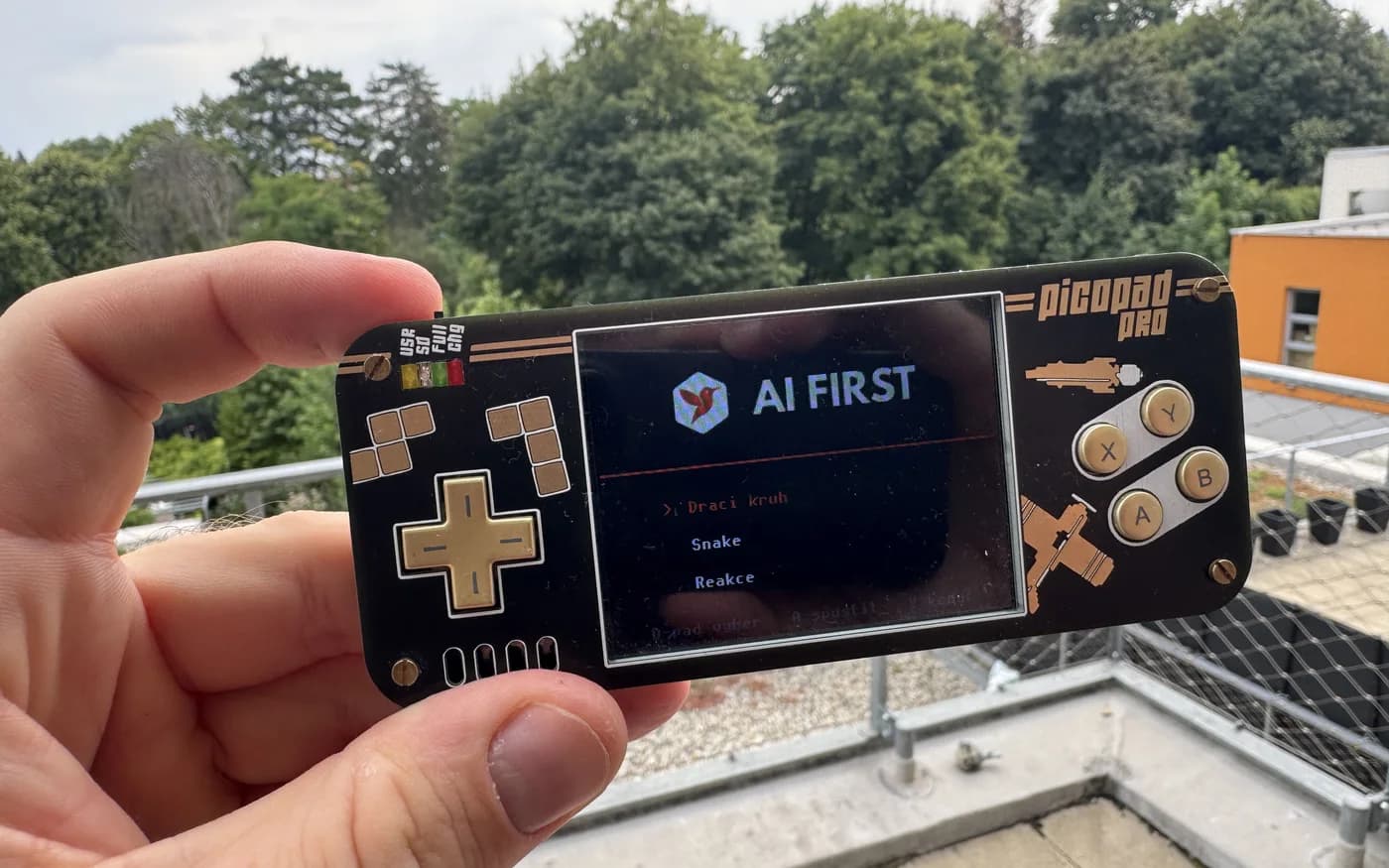
Custom OS and Games for the Picopad Game Console
On the open source Picopad console I'm building my own system and a set of games. Snake runs, a dungeon crawler is in progress. My first time vibe coding in plain C.
About the project
Picopad is a small open source game console made in the Czech Republic. Inside is an RP2040 chip: 264 KB of RAM, 2 MB of flash, a 320×240 display. Nothing more.
On top of it I'm building my own system and a set of games. A menu, a high score table, an attract mode (when nobody plays for fifteen seconds, the console starts playing by itself) and my own takes on the classics: Snake, Pong, Space Invaders.
I also have a step-based dungeon crawler in the style of the Czech classic Gates of Skeldal in progress. I generate its scenes with AI from a single anchor reference, otherwise every room looks like it came from a different game.
It's my first time vibe coding in plain C. You can't be wasteful on this console, every kilobyte shows. Next to it runs a simulator on my Mac, so I debug a game in a window and flash it to the hardware only when it's done.
It's work in progress and a lot of it is just getting started. Still, it's nice proof that vibe coding doesn't stop at websites and apps: you can build software for a physical device just as smoothly.
Why I built it
- I wanted to try vibe coding in plain C.
- A 264 KB RAM limit teaches you to write lean code.
- I write code on my Mac and play on real hardware.
- Proof that vibe coding can handle hardware too.
How it works (under the hood)
- Custom menu, a TOP 5 high score table and attract mode.
- Snake with obstacles, Pong and Space Invaders in progress.
- A step-based dungeon crawler with AI generated scenes.
- A Mac simulator (SDL2), the same code targets the console.
Built with
Want to build like this too?
I teach building apps without programming in the AI First course.
More from Game
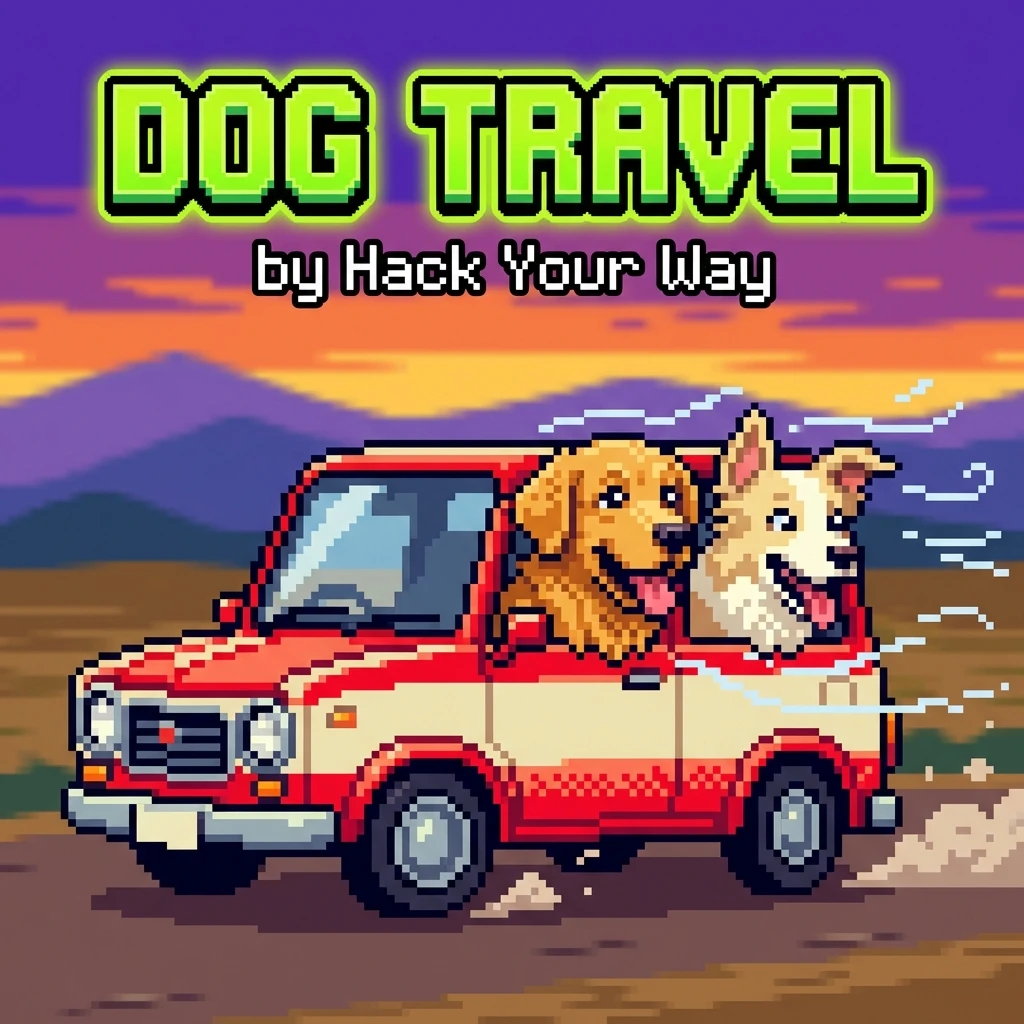
Dog Travel
An interactive text adventure where you start a travel agency for dogs and learn the Hack Your Way mindset. 17 scenes, 15 endings, 3 minigames.
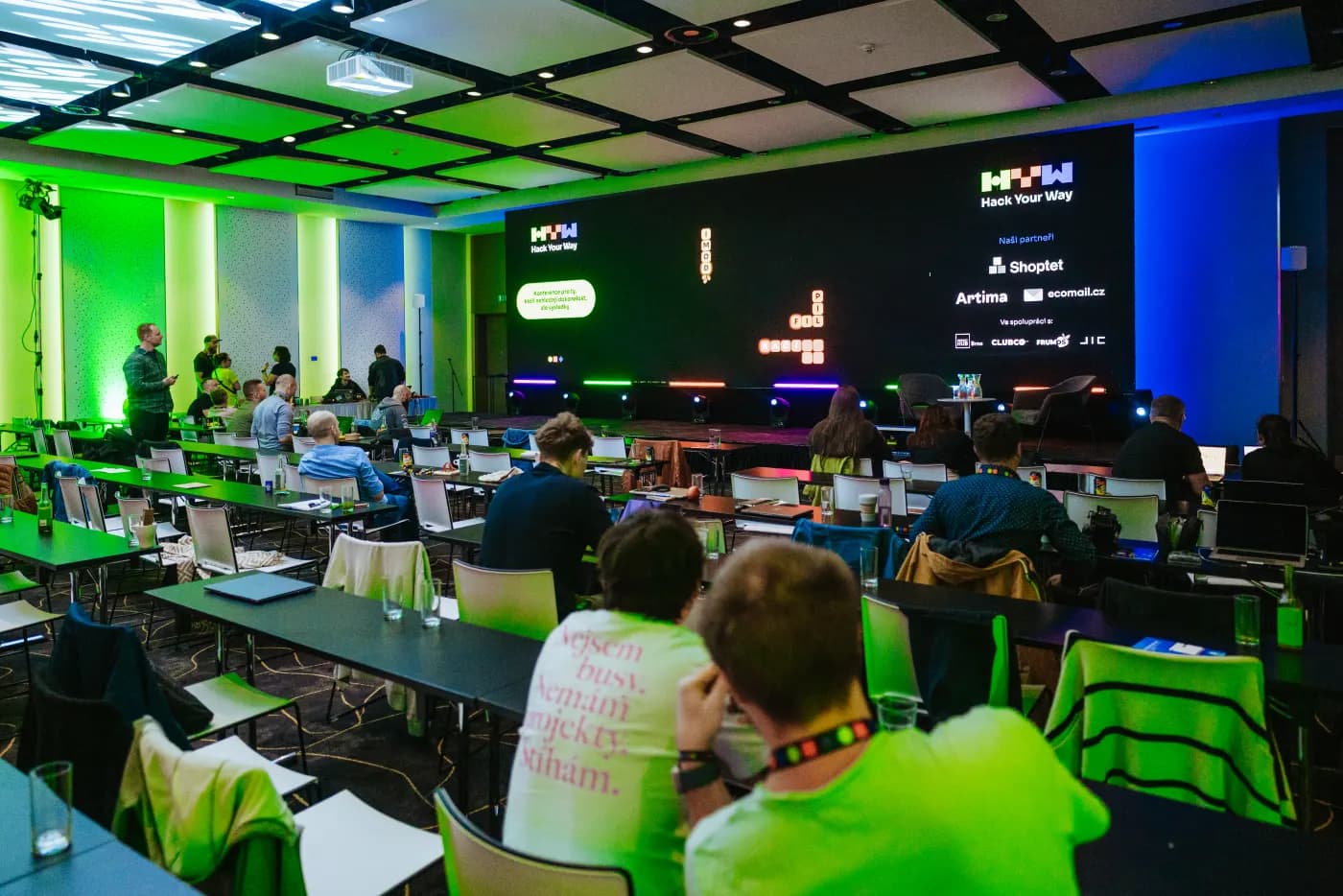
Hywgames: Multiplayer Games for Conferences
Realtime multiplayer Snake on a big conference LED screen: scan a QR, control your snake from your phone, last one standing wins.
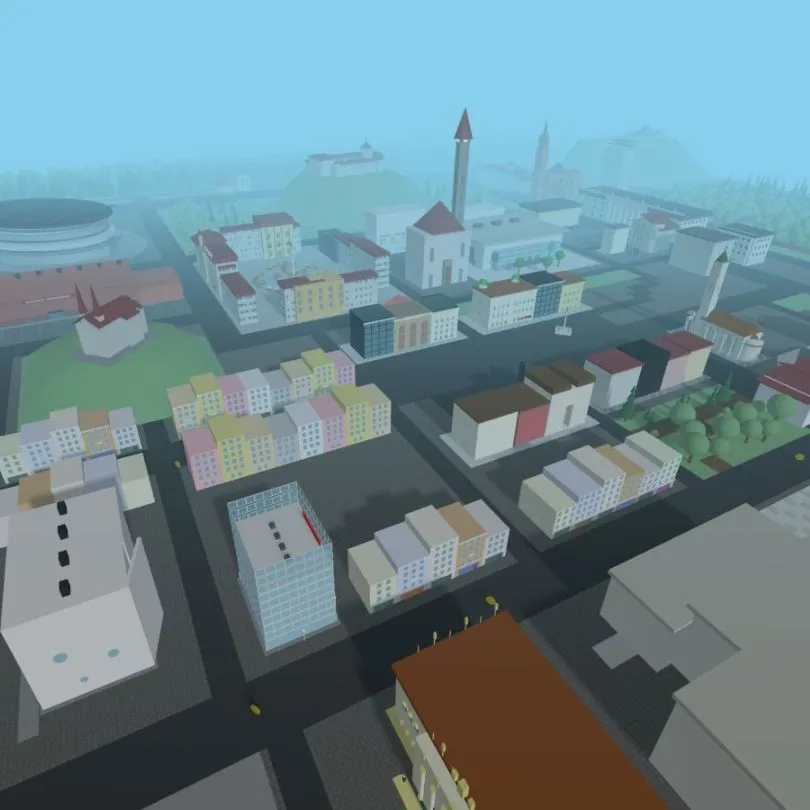
HrejBrno.cz
A 3D game where you walk through virtual Brno and collect coins. 800 players, 5,000+ games, and for me the best vibe coding training there was.